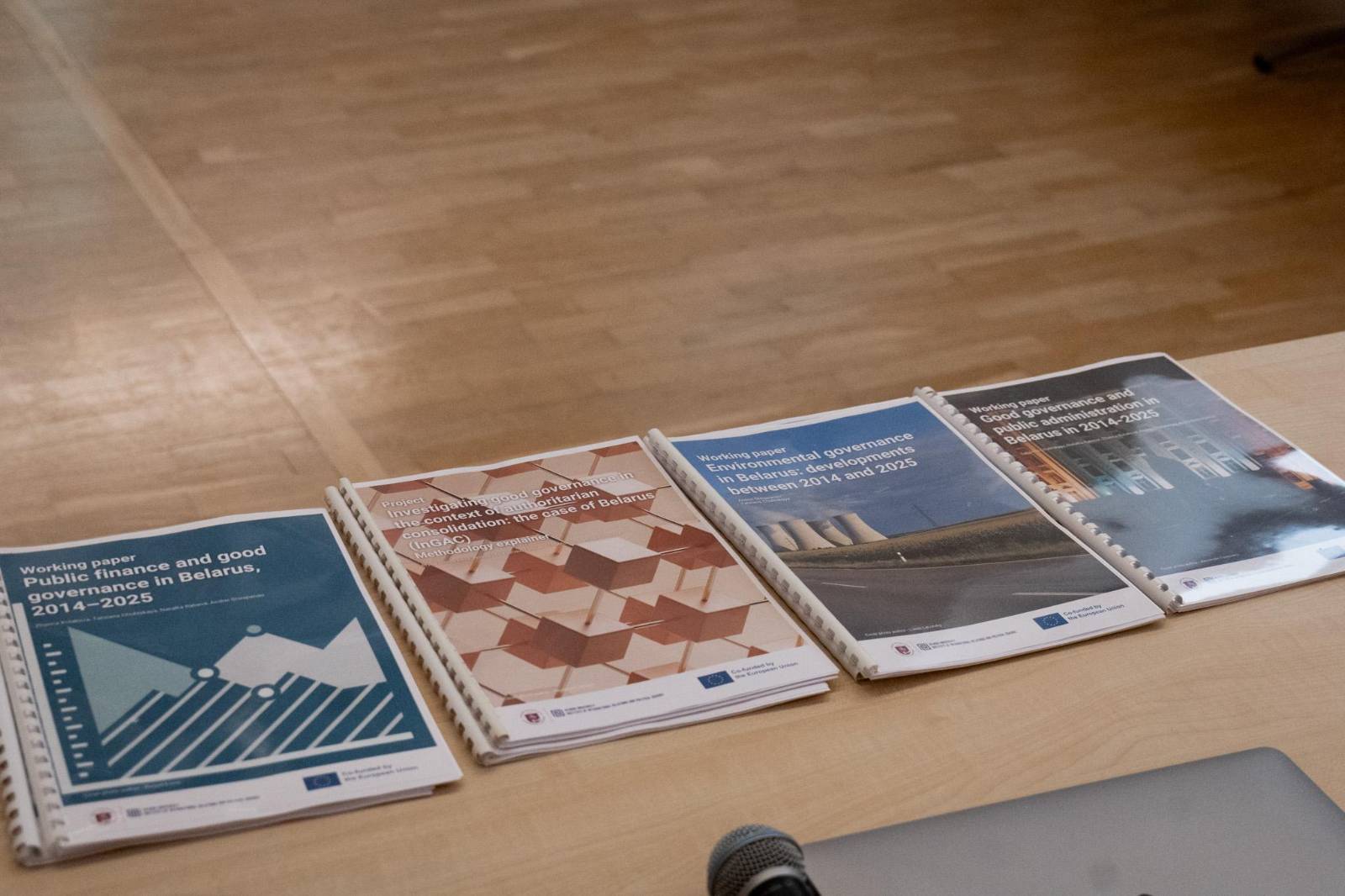
Experts from BIPART, as part of the project team for “Investigating Good Governance in the Context of Authoritarian Consolidation: The Case of Belarus (InGAC)” at Vilnius University, presented the findings of their analysis on how the principles of good governance were introduced and interpreted in the country between 2014 and 2025.
Key findings:
- The Belarusian state, like other autocracies, adapts good governance principles to its own needs, using relevant rhetoric to attract funding and strengthen its legitimacy.
- Long-term international efforts have mainly led to technocratic changes in public administration (digitalisation, improved management), while democratic elements have remained minimal.
- Between 2014 and 2020, the authorities actively accepted international assistance in the field of good governance, prioritising infrastructural projects that did not touch upon political “red lines”.
- These projects created limited opportunities for progressively minded civil servants and government agencies.
- The projects included in the database attracted €753.24 million between 2014 and 2025; in 2016, this funding accounted for 2.2% of Belarus’s consolidated budget.
- After 2020 and 2022, cooperation with international actors sharply decreased, their presence in Belarus became minimal, and Russia’s influence increased.
- The authorities continue to modernise public administration, but their efforts are technocratic in nature and/or aimed at strengthening control.
- The remaining governance-related projects have become depoliticised, focusing on migration, sustainable development, nuclear safety, and other non-political areas.
Research papers on public administration, public finance, and environmental policy are available here:
Analysis of governance in Belarus: new working papers